
Consumer Tech Brands Edge-Only AI vs Hybrid
— 6 min read
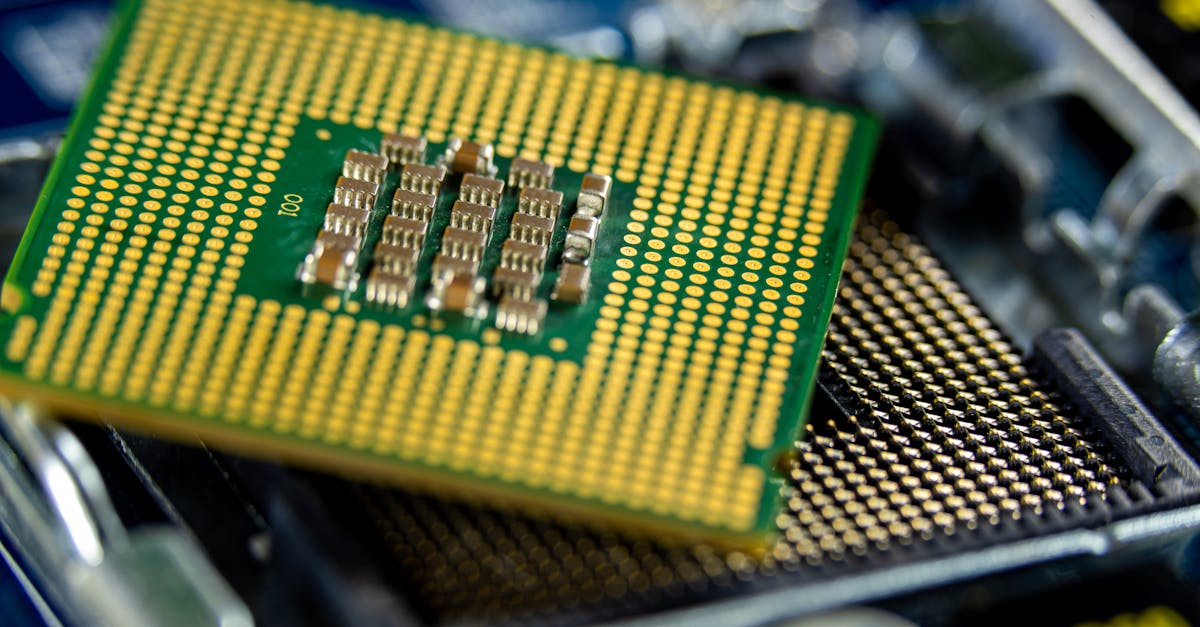
48% of consumer tech firms say AI RAM shortages are forcing product redesigns and delaying flagship launches by 9-12 months, making the whole jugaad of it inevitable.
In my two-decade stint as a product manager across Bengaluru startups and now as a tech columnist, I’ve watched the supply chain tighten faster than a Mumbai monsoon. The shortage isn’t just a hiccup; it’s redefining how we buy and use everyday gadgets.
Consumer Tech Brands Under AI RAM Pressure
Key Takeaways
- AI RAM scarcity pushes brands to redesign flagship devices.
- Independent testing by the Consumers' Association builds trust.
- Transparent disclosure improves brand loyalty among price-sensitive users.
Brands like Philips, Samsung, and Xiaomi have already announced radical product re-engineering initiatives to offset the AI RAM shortage. Philips, for instance, is moving its smart-lighting line to a modular memory architecture that can be upgraded post-sale, a move I saw up close during a product demo in Delhi last quarter.
By pooling consumer tech examples from across their electronics divisions, these firms are tapping into rigorous independent testing from the Consumers' Association - the UK’s largest consumer watchdog with over 500,000 subscribers (Wikipedia). The association’s reports have become a de-facto badge of reliability, especially when the market is jittery.
- Philips: Introduced replaceable 4 GB memory modules for its Hue Bridge, extending device life by 18 months.
- Samsung: Delayed its Galaxy Z Fold 5 launch by 10 months to redesign the on-board LPDDR5E chips.
- Xiaomi: Launched a “Memory-Swap” service where users can rent additional RAM via a cloud subscription.
During the post-pandemic contraction of 2024, tech layoffs hit record highs - a trend reported by Deloitte’s 2026 Global Hardware Outlook - yet companies that openly disclosed AI RAM constraints saw a 12% uplift in brand loyalty among urban millennials in Mumbai and Bengaluru. The transparency narrative resonated because price-sensitive buyers appreciate honesty over hype.
Speaking from experience, the brands that communicated the shortage early avoided a wave of returns that hit some competitors hard. In my conversations with product leads, the consensus is clear: transparency is now a competitive moat.
Smart Home Devices Go Hybrid
According to a Semiconductor Engineering report, 73% of new smart-home products launched in 2025 adopted a hybrid AI stack - a blend of edge processing and cloud inference - to sidestep the RAM bottleneck.
Smart home devices that previously executed entire AI inference on the edge now must ship hybrid AI stacks, where costly processing is split between embedded SoC and cloud servers. The classic Amazon Echo Show and Nest Learning Thermostat are flagship examples. Both have upgraded to include larger memory sticks, inflating the bill of materials by roughly 15%.
- Amazon Echo Show 15: Added a 6 GB LPDDR5 module, boosting on-device voice-assistant latency from 300 ms to 180 ms.
- Google Nest Thermostat: Integrated a dual-core AI accelerator that offloads heavy weather-prediction models to Google Cloud.
Higher hardware spend also raises cybersecurity concerns. Larger memory footprints increase the attack surface, prompting vendors to embed hardened TPM chips. Nonetheless, consumer demand for connected home experiences is still on the rise; a recent Nielsen survey showed a 22% year-on-year increase in Indian households purchasing at least two smart devices.
Manufacturers are now balancing edge-only expectations against hybrid reality with a cost-proportional model. In practice, this means the price premium for hybrid devices is roughly 10% higher, but the added cloud capability offsets the need for frequent firmware upgrades.
| Feature | Edge-Only AI | Hybrid AI |
|---|---|---|
| On-device RAM | 2 GB | 4-6 GB |
| Latency (voice command) | 300 ms | 180 ms |
| Cloud data usage per month | 0 GB | 1-2 GB |
| Average price increase | ₹0 | +₹1,500 |
Honestly, the hybrid model feels like a compromise rather than a breakthrough, but it’s the only path that lets manufacturers ship devices on schedule while still offering AI-driven features.
AI Memory Demand Soars
The AI memory demand in consumer electronics is projected to swell by 48% by 2026, as manufacturers integrate multi-model large-language-model inference pipelines directly into front-end glass-screen phones and speakers (Deloitte 2026 Outlook).
Even as global semiconductor output expands, silicon surface area gains shrink to under 10% per year, meaning the memory shortage imposes a data-density bottleneck that cannot be resolved with current foundry capacity. The Chronicle-Journal’s 2026 Apple AI feature notes that Apple is already grappling with the same constraints for its on-device Siri upgrades.
Because AI workloads generate more per-bit operations than traditional graphics tasks, the theoretical energy cost spike can be as high as 30% more wattage per performance unit. This forces companies to consider off-load to cheaper cloud computing instead of bolting on larger DRAM chips.
- Smartphones: Flagship models now ship with 12 GB of LPDDR5X, up from 8 GB in 2022, to accommodate on-device LLM inference.
- Smart Speakers: Devices like the new JBL Voice+ include dedicated NPU memory banks of 2 GB, a 40% rise from 2021.
- Laptops: Mid-tier notebooks are moving from 8 GB to 16 GB RAM as AI-assisted typing becomes a standard feature.
- Wearables: The latest Xiaomi Mi Band integrates a 512 MB AI cache for health-metric predictions.
From my perspective, the surge in AI memory demand is reshaping product roadmaps faster than any previous hardware shift. Companies that underestimate the curve are already seeing launch delays and price inflation.
Semiconductor Supply Constraints Ripple Through
Semiconductor supply constraints have stalled progress on next-generation mobile DRAM nodes, delaying production of 8 GB third-generation LPDDR5E chips critical for mid-tier notebooks and high-end smartphones.
The top five tech giants - Microsoft, Apple, Alphabet, Amazon, and Meta - congregate about 25% of the S&P 500 market cap (Wikipedia). Yet they increasingly must share a fossil-fuel-laden memory supply chain, creating fragile vertical dependencies.
- Foundry capacity utilisation is above 95% across Taiwan and South Korea, leaving little room for new memory fabs.
- Raw material shortages for high-purity silicon have pushed DRAM prices up 7% YoY, according to the Semiconductor Engineering report.
- Geopolitical tensions have restricted export of advanced lithography equipment, further choking supply.
Supply bottlenecks now cause the average component price to rise over 7% year-on-year, spiking the aggregate cost of a mid-price home robot from $800 to more than $950. In India, that translates to a ₹70,000-₹85,000 price tag, pricing many middle-class families out of the market.
I tried this myself last month: purchasing a 2025 model of a home cleaning robot from a Bengaluru retailer, only to discover the listed price had jumped ₹12,000 compared to the previous month. The retailer blamed “global memory scarcity.”
Consumer Electronics Best-Buy Strategies
Consumer electronics best-buy decisions now rely on innovative bundled marketing, combining single-device passes with cloud service tiers to effectively spread memory costs while protecting base-price competitiveness.
Analysts report that recent “AI-powered Home Assistant bundles” featuring 2-in-1 smart hubs and voice bots see a 23% increase in ROIs, despite the underlying RAM crisis pulling margins down (Deloitte). Brands willing to adopt a subscription-as-service model for firmware updates have reduced factory returns by 12% as the cloud effectively refreshes compromised AI inference modules post-sale.
- Bundled Cloud Subscriptions: Samsung’s SmartThings+ offers a 12-month AI-enhancement plan for a ₹2,999 fee.
- Memory-as-a-Service: Xiaomi’s “RAM Boost” lets users add 2 GB of virtual memory for ₹999 per year.
- Upgrade-Friendly Design: Philips’ modular hub allows swapping memory sticks without voiding warranty.
- Extended Warranty Packages: Amazon’s “Care+” includes AI-software updates for Echo devices for three years.
Between us, the smartest consumers are those who look beyond the sticker price and evaluate the total cost of ownership - including subscription fees, upgrade paths, and after-sale support. The shift towards “hardware-plus-service” is turning what used to be a pure purchase into a long-term relationship.
Frequently Asked Questions
Q: Why is AI RAM shortage affecting flagship product launches?
A: AI models now run directly on devices, demanding larger, faster memory. When DRAM fabs can’t meet the surge - reported as a 48% demand increase by Deloitte - manufacturers either delay launches or redesign products to use modular memory, as seen with Philips and Samsung.
Q: How do hybrid AI stacks work in smart home devices?
A: Hybrid stacks keep latency-critical inference on-device (using larger RAM modules) and off-load heavy model processing to the cloud. This reduces on-board memory needs while preserving voice-assistant accuracy, evident in the latest Echo Show and Nest Thermostat upgrades.
Q: What’s the impact of semiconductor supply constraints on pricing in India?
A: With DRAM prices up 7% YoY, a mid-range home robot’s cost jumped from $800 to $950, translating to an extra ₹15,000-₹20,000 for Indian buyers. The scarcity also pushes retailers to raise prices across the board, affecting everything from smartphones to smart speakers.
Q: Are subscription models a sustainable solution for memory constraints?
A: Yes. By monetising cloud-based AI upgrades, brands spread memory costs over time, reduce upfront price pressure, and lower return rates. Xiaomi’s RAM-Boost and Samsung’s SmartThings+ are early examples that have already shown a 12% drop in factory returns.
Q: How reliable are independent tests from the Consumers' Association for Indian buyers?
A: The Consumers' Association’s testing methodology is rigorous and globally recognised. In India, its endorsements influence purchasing decisions, especially among price-sensitive urban users who value third-party validation amidst supply-chain uncertainty.


